Die Monographie „An Epistemology of Religion and Gender: Biopolitics – Performativity – Agency“ von Prof. Dr. Ulrike E. Auga
eröffnet die Serie „Routledge Critical Studies in Religion, Gender and Sexuality“
Ulrike E. Auga, An Epistemology of Religion and Gender: Biopolitics – Performativity – Agency, London/ New York: Routledge 2020.
eröffnet die Serie „Routledge Critical Studies in Religion, Gender and Sexuality“
Ulrike E. Auga, An Epistemology of Religion and Gender: Biopolitics – Performativity – Agency, London/ New York: Routledge 2020.
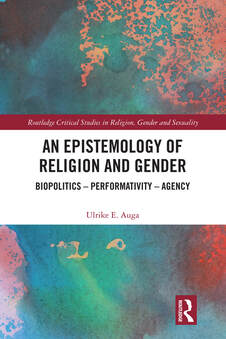
Gebundene Ausgabe/ eBook, 344 Seiten
Verlag: Routledge
Sprache: Englisch
ISBN-10: 0367226170
ISBN-13: 978-0367226176
Verfügbar im Handel:
https://www.routledge.com/An-Epistemology-of-Religion-and-Gender-Biopolitics-Performativity-and/Auga/p/book/9780367226176
Die Publikation erarbeitet einen neuen epistemologischen Rahmen für eine Theoretisierung der Rolle von Religion und Geschlecht in der öffentlichen Sphäre. Es vermittelt ein differenziertes Verständnis von Geschlecht und seiner Beziehung zu Religion als primär performativer Kategorie der Wissensproduktion. Dieses Verständnis wird anhand internationaler Fallstudien erörtert.
Das Buch konzentriert sich auf die neue Rolle von Religion und Geschlecht in der öffentlichen Sphäre in Europa, den USA und im afrikanischen Kontext. Es analysiert die Interdependenz von Religion, Geschlecht und Neonationalismen und untersucht die biopolitischen Eingriffe von Nationalstaaten und dominanten politischen und religiösen Institutionen. Anschließend werden Gegendiskurse und Möglichkeiten für Aktivismus und Handlungsmacht in Kontexten wie der DDR und der Occupy Wall Street-Bewegung aufgedeckt. Durch die Verbindung von Gender- und queeren Theorien mit postkolonialen und post-säkularen Perspektiven wird den Lesenden ein differenzierteres Verständnis kritischer zeitgenössischer Fragen in Bezug auf Religion, Geschlecht und Sexualität vermittelt.
Die Publikation bietet eine radikal neue Sicht auf Religion, Geschlecht und öffentliches Leben. Ihr Zielpublikum sind insbesondere Wissenschaftler*innen aus den Bereichen der Religionswissenschaft, Gender und Visual Culture Studies, Kulturwissenschaft und Kulturkritik, Theologie sowie jene, die sich mit der Interaktion von Religion mit Politik, Soziologie, Anthropologie und sozialem Aktivismus auseinandersetzen.
Verlag: Routledge
Sprache: Englisch
ISBN-10: 0367226170
ISBN-13: 978-0367226176
Verfügbar im Handel:
https://www.routledge.com/An-Epistemology-of-Religion-and-Gender-Biopolitics-Performativity-and/Auga/p/book/9780367226176
Die Publikation erarbeitet einen neuen epistemologischen Rahmen für eine Theoretisierung der Rolle von Religion und Geschlecht in der öffentlichen Sphäre. Es vermittelt ein differenziertes Verständnis von Geschlecht und seiner Beziehung zu Religion als primär performativer Kategorie der Wissensproduktion. Dieses Verständnis wird anhand internationaler Fallstudien erörtert.
Das Buch konzentriert sich auf die neue Rolle von Religion und Geschlecht in der öffentlichen Sphäre in Europa, den USA und im afrikanischen Kontext. Es analysiert die Interdependenz von Religion, Geschlecht und Neonationalismen und untersucht die biopolitischen Eingriffe von Nationalstaaten und dominanten politischen und religiösen Institutionen. Anschließend werden Gegendiskurse und Möglichkeiten für Aktivismus und Handlungsmacht in Kontexten wie der DDR und der Occupy Wall Street-Bewegung aufgedeckt. Durch die Verbindung von Gender- und queeren Theorien mit postkolonialen und post-säkularen Perspektiven wird den Lesenden ein differenzierteres Verständnis kritischer zeitgenössischer Fragen in Bezug auf Religion, Geschlecht und Sexualität vermittelt.
Die Publikation bietet eine radikal neue Sicht auf Religion, Geschlecht und öffentliches Leben. Ihr Zielpublikum sind insbesondere Wissenschaftler*innen aus den Bereichen der Religionswissenschaft, Gender und Visual Culture Studies, Kulturwissenschaft und Kulturkritik, Theologie sowie jene, die sich mit der Interaktion von Religion mit Politik, Soziologie, Anthropologie und sozialem Aktivismus auseinandersetzen.
Prof Dr Ulrike E. Auga’s monograph “An Epistemology of Religion and Gender: Biopolitics – Performativity – Agency”
opens the series “Routledge Critical Studies in Religion, Gender and Sexuality”
Ulrike E. Auga, An Epistemology of Religion and Gender: Biopolitics – Performativity – Agency, London/ New York: Routledge 2020.
opens the series “Routledge Critical Studies in Religion, Gender and Sexuality”
Ulrike E. Auga, An Epistemology of Religion and Gender: Biopolitics – Performativity – Agency, London/ New York: Routledge 2020.
Hardcover/ eBook, 344 pages
Publisher: Routledge
Language: English
ISBN-10: 0367226170
ISBN-13: 978-036722617
Available for purchase:
https://www.routledge.com/An-Epistemology-of-Religion-and-Gender-Biopolitics-Performativity-and/Auga/p/book/9780367226176
This book puts forward a new epistemological framework for a theory of religion’s and gender’s role in the public sphere. It provides a sophisticated understanding of gender and its relation to religion as a primarily performative category of knowledge production, rooting that understanding in case studies from around the world.
The publication focuses on the new role of religion and gender in the public sphere in Europe, the U.S.A. and the African context. It analyses the interdependence of religion, gender and neo-nationalisms, scrutinising the biopolitical interferences of nation states and dominant political and religious institutions. It then moves on to uncover counter-discourses and spaces of activism and agency in contexts such as East Germany and the Occupy Wall Street movement. Using gender and queer theory in tandem with postcolonial and post-secular perspectives, readers are shown a more nuanced understanding of critical contemporary questions related to religion, gender and sexuality.
This is a bold new take on religion, gender and public life. As such, it will be of keen interest to scholars of Religious, Gender and Visual Culture Studies and Cultural Critique, Theology, as well as those working on religion’s interaction with Politics, Sociology, Anthropology and Social Activism.
“Through extensive research across continents and informed by large-scale collaborations across disciplines, An Epistemology of Religion and Gender demonstrates the stakes of academic undertakings. Professor Auga shows her readers that by rethinking religion and gender we might also shift long-standing public controversies over and sexuality, decolonise public space, create new ways of responding to conflict and even violence, undertake innovative activism in response to injustice, and imagine the future differently. It is a journey well worth taking.”
Janet R. Jakobsen, Claire Tow Professor of Women’s, Gender and Sexuality Studies, Barnard College, Columbia University, New York City
“Ulrike Auga’s An Epistemology of Religion and Gender is a trailblazing work in its development of new epistemic insights and angles for the study of religion, the body and power. This book brings together a body of original theoretical work, exemplary case studies and innovative perspectives that are likely to influence the field for many years to come.”
Bee Scherer, Professor of Religious Studies and Gender Studies (INCISE, Canterbury, U.K.) and Founder-Facilitator of Queering Paradigms
“From a perspective of situated knowledge, the book brings together epistemological debates from religious studies, gender studies and performance studies and applies them on such various fields as the Occupy Wall Street movement in New York, agency photography in Mali and masculine hegemony in the South African Truth and Reconciliation Commission. By capturing worldwide past and present debates, it invites students and scholars to creatively rethink semantic categories.”
Monika Salzbrunn, Full Professor of Religion, Migration, Diaspora Studies, University of Lausanne
Publisher: Routledge
Language: English
ISBN-10: 0367226170
ISBN-13: 978-036722617
Available for purchase:
https://www.routledge.com/An-Epistemology-of-Religion-and-Gender-Biopolitics-Performativity-and/Auga/p/book/9780367226176
This book puts forward a new epistemological framework for a theory of religion’s and gender’s role in the public sphere. It provides a sophisticated understanding of gender and its relation to religion as a primarily performative category of knowledge production, rooting that understanding in case studies from around the world.
The publication focuses on the new role of religion and gender in the public sphere in Europe, the U.S.A. and the African context. It analyses the interdependence of religion, gender and neo-nationalisms, scrutinising the biopolitical interferences of nation states and dominant political and religious institutions. It then moves on to uncover counter-discourses and spaces of activism and agency in contexts such as East Germany and the Occupy Wall Street movement. Using gender and queer theory in tandem with postcolonial and post-secular perspectives, readers are shown a more nuanced understanding of critical contemporary questions related to religion, gender and sexuality.
This is a bold new take on religion, gender and public life. As such, it will be of keen interest to scholars of Religious, Gender and Visual Culture Studies and Cultural Critique, Theology, as well as those working on religion’s interaction with Politics, Sociology, Anthropology and Social Activism.
“Through extensive research across continents and informed by large-scale collaborations across disciplines, An Epistemology of Religion and Gender demonstrates the stakes of academic undertakings. Professor Auga shows her readers that by rethinking religion and gender we might also shift long-standing public controversies over and sexuality, decolonise public space, create new ways of responding to conflict and even violence, undertake innovative activism in response to injustice, and imagine the future differently. It is a journey well worth taking.”
Janet R. Jakobsen, Claire Tow Professor of Women’s, Gender and Sexuality Studies, Barnard College, Columbia University, New York City
“Ulrike Auga’s An Epistemology of Religion and Gender is a trailblazing work in its development of new epistemic insights and angles for the study of religion, the body and power. This book brings together a body of original theoretical work, exemplary case studies and innovative perspectives that are likely to influence the field for many years to come.”
Bee Scherer, Professor of Religious Studies and Gender Studies (INCISE, Canterbury, U.K.) and Founder-Facilitator of Queering Paradigms
“From a perspective of situated knowledge, the book brings together epistemological debates from religious studies, gender studies and performance studies and applies them on such various fields as the Occupy Wall Street movement in New York, agency photography in Mali and masculine hegemony in the South African Truth and Reconciliation Commission. By capturing worldwide past and present debates, it invites students and scholars to creatively rethink semantic categories.”
Monika Salzbrunn, Full Professor of Religion, Migration, Diaspora Studies, University of Lausanne
Sie sind herzlich eingeladen zum Workshop von Prof. Dr. Ulrike E. Auga bei der Bundeszentrale für politische Bildung in Berlin:
Prof. Dr. Ulrike E. Auga
Workshop „Postkoloniale und gender/queere Perspektiven angesichts von (Post)-Säkularitäten“
Konferenz der Bundeszentrale für politische Bildung
„Ein Jahrhundert Religionsverfassungsrecht: Säkularität und Gesellschaft im Wandel“
Zeit: 29.01.2020 | Mittwoch | 11.15-13.00 Uhr
Ort: Umweltforum Berlin | Putendorfstraße 11 | 10249 Berlin
Prof. Dr. Ulrike E. Auga
Workshop „Postkoloniale und gender/queere Perspektiven angesichts von (Post)-Säkularitäten“
Konferenz der Bundeszentrale für politische Bildung
„Ein Jahrhundert Religionsverfassungsrecht: Säkularität und Gesellschaft im Wandel“
Zeit: 29.01.2020 | Mittwoch | 11.15-13.00 Uhr
Ort: Umweltforum Berlin | Putendorfstraße 11 | 10249 Berlin
Die Teilnahme an der Konferenz ist kostenfrei.
Bitte melden Sie sich im Vorfeld auf der Homepage der Bundeszentrale für politische Bildung an: www.bpb.de.
Der Konferenzort verfügt über einen rollstuhlgerechten Zugang.
Das gesamte Konferenzprogramm finden Sie unter folgendem Link:
https://m.bpb.de/system/files/dokument_pdf/Programm-Ein%20Jahrhundert%20Religionsverfassungsrecht.pdf
